The interruption
Paper does not fail because it is old. It fails because it stalls the exam.
Physical exhibits create unnecessary friction in depositions. Attorneys have to print,
organize, transport, distribute, and manage documents before they can even ask a question.
In remote depositions, that problem gets worse — exhibits may need to be shipped in
advance, creating logistical headaches and potentially exposing documents before they are
introduced. And when an attorney needs an unexpected document, photo, or video, the
traditional exhibit process can bring the deposition to a halt.
Introduce the exhibit when the testimony calls for it — not when the logistics allow it.
Paper HandOut
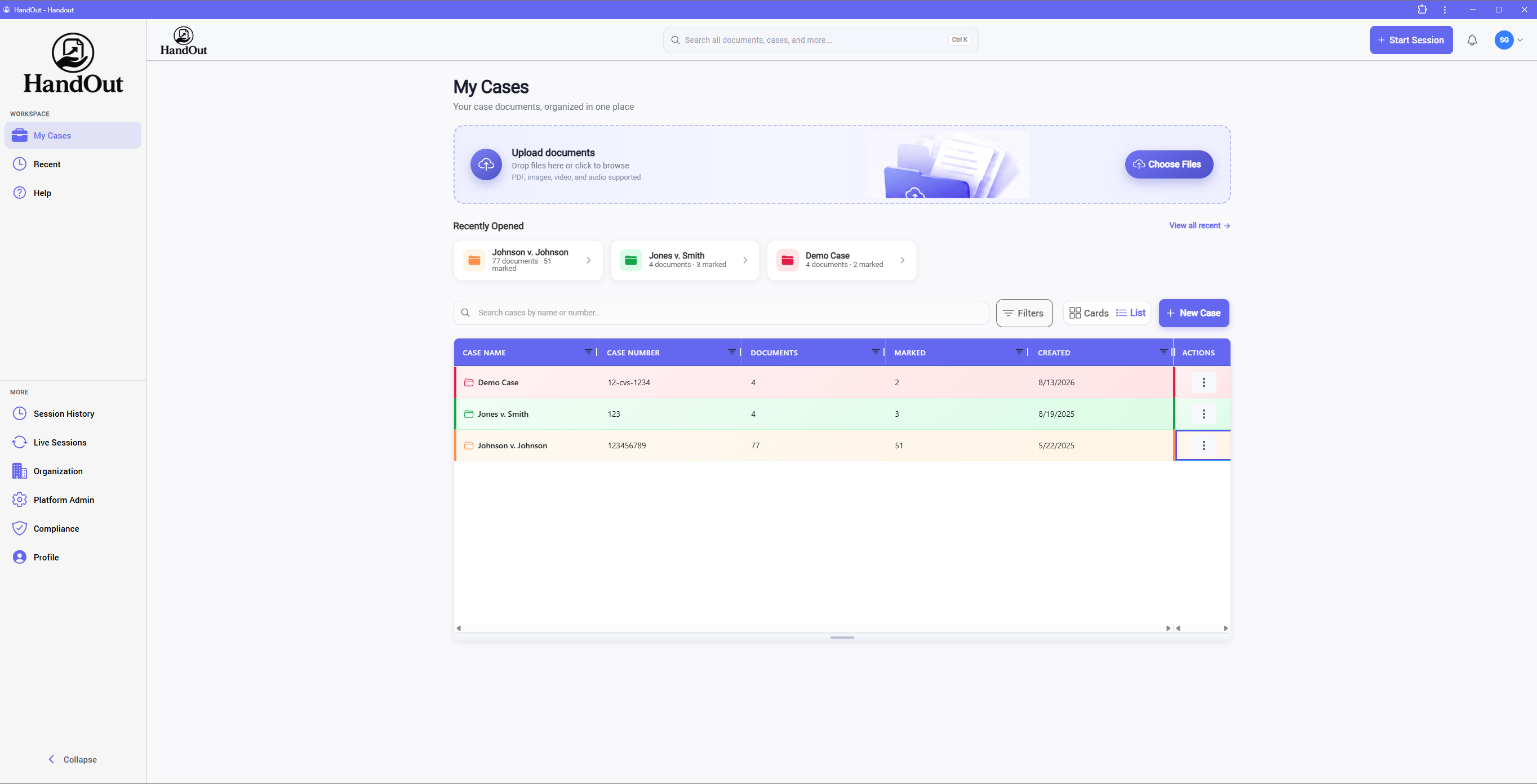
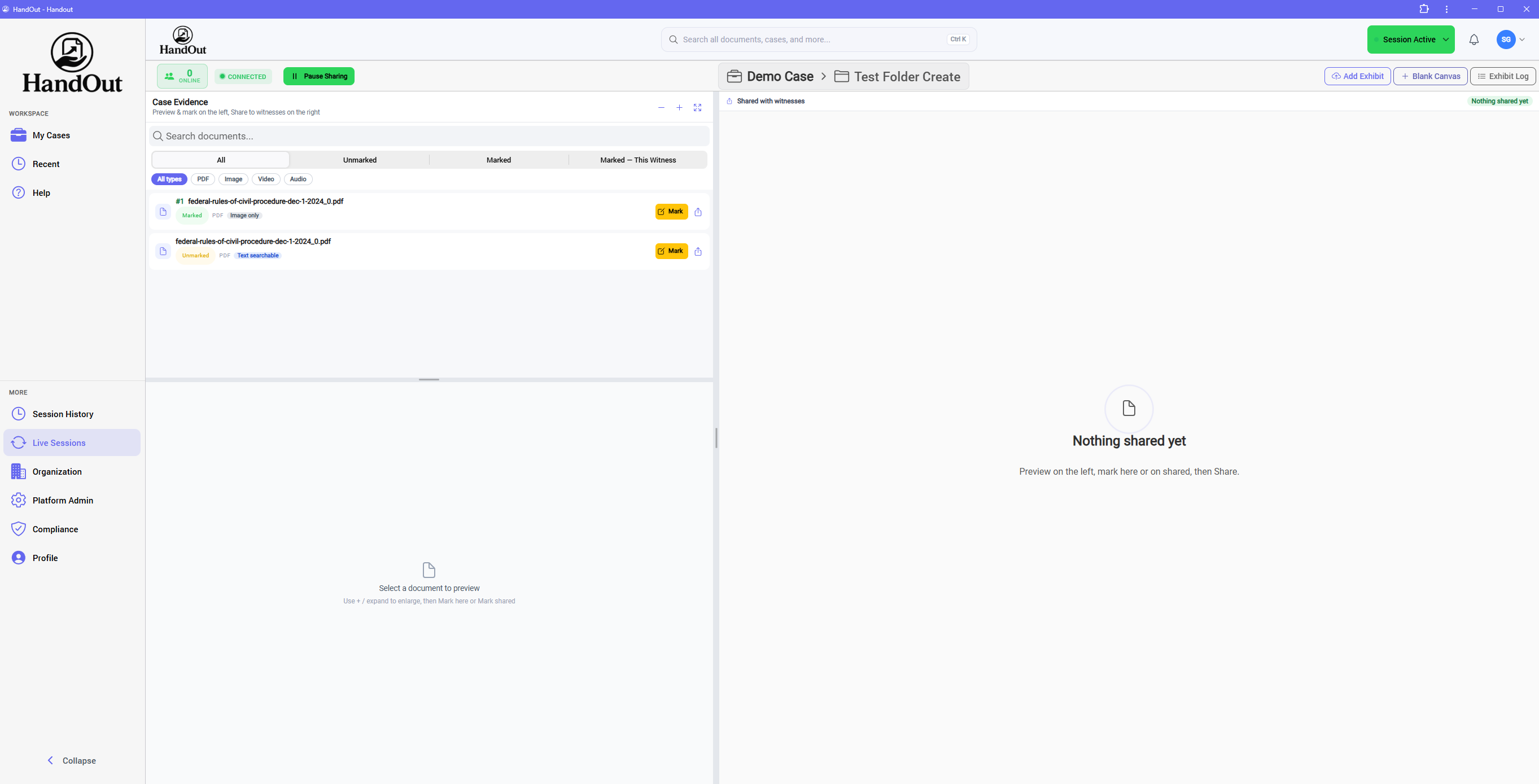
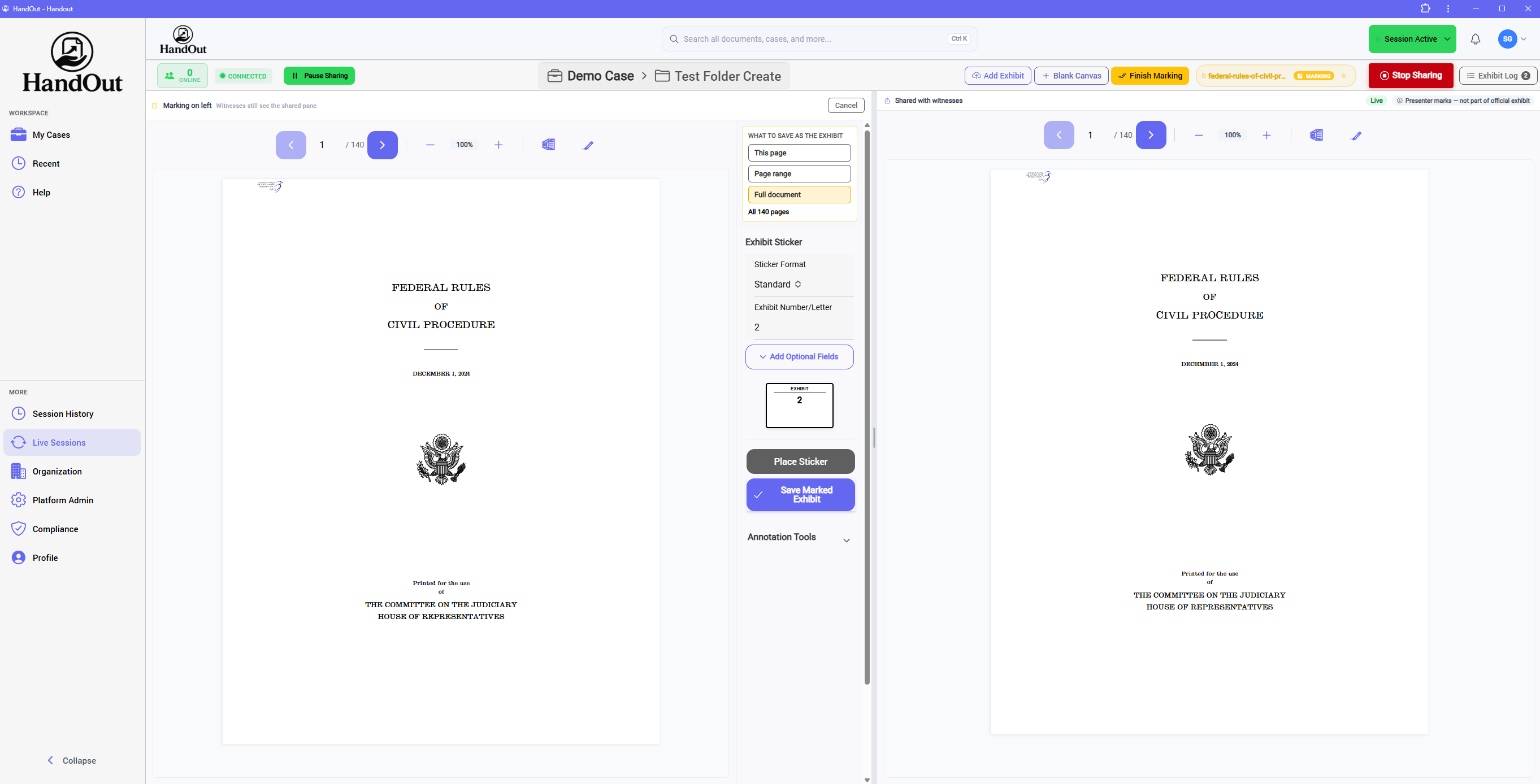
Prep. Print, sort, label, copy, binder, ship. Upload once. The folder is the binder.
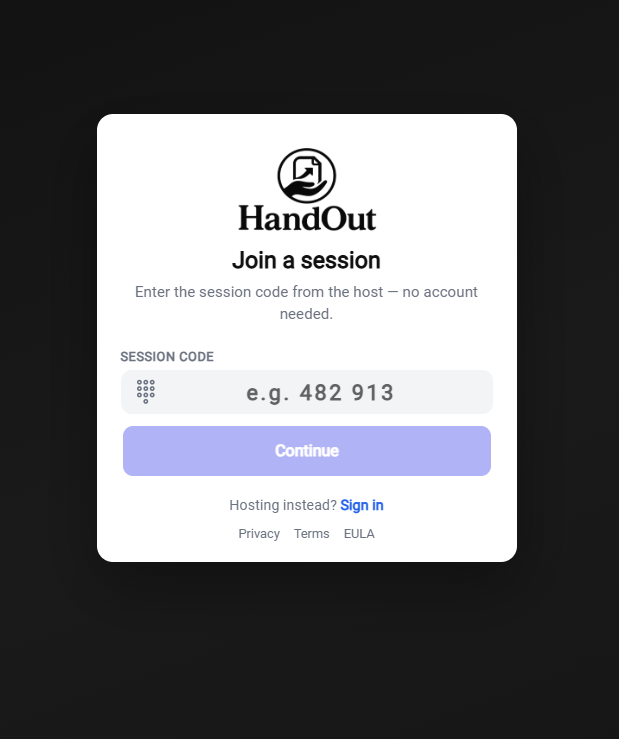
Remote. Overnight the set. Hope they do not peek. Join by code. They see nothing until you share.
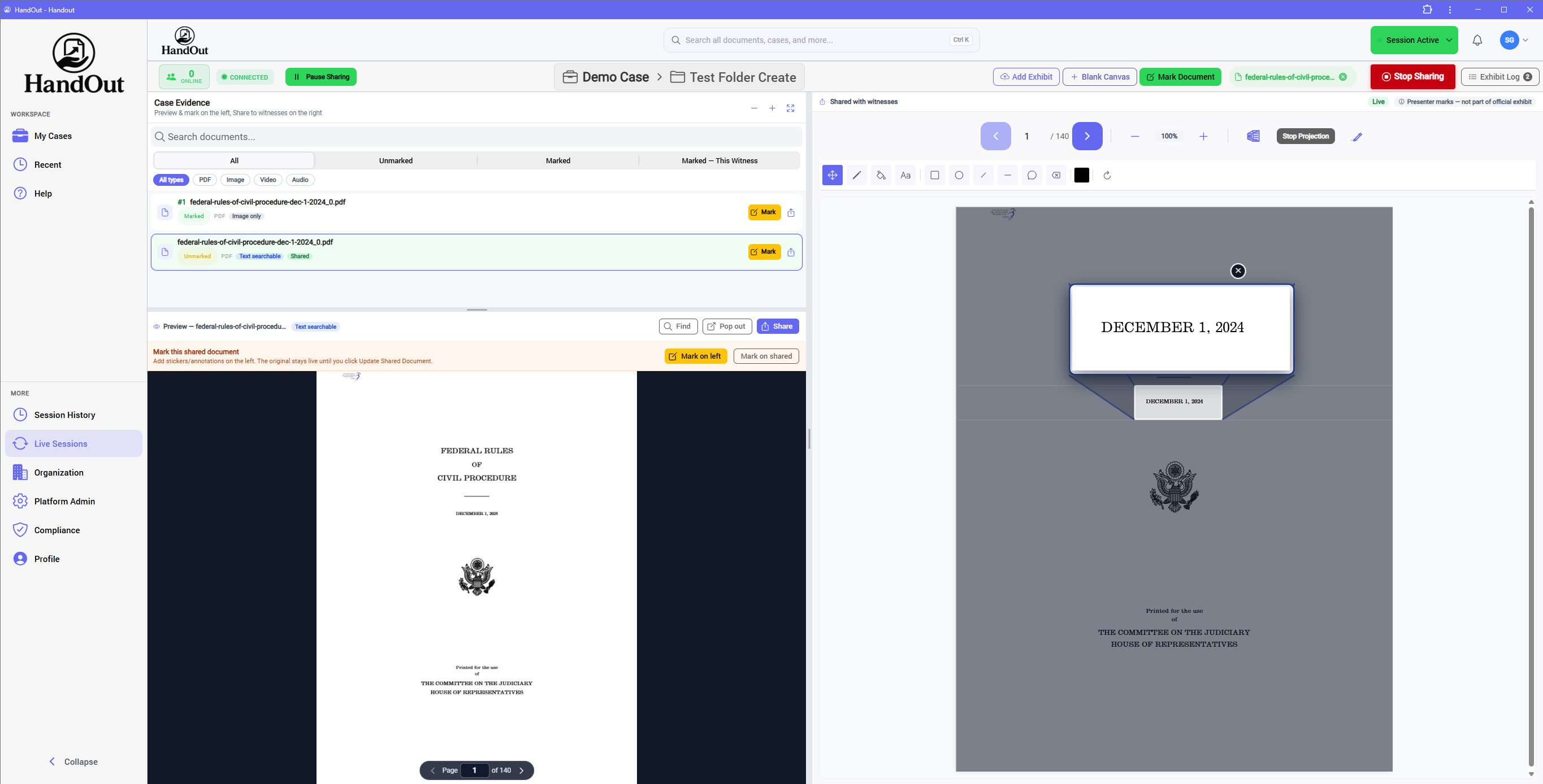
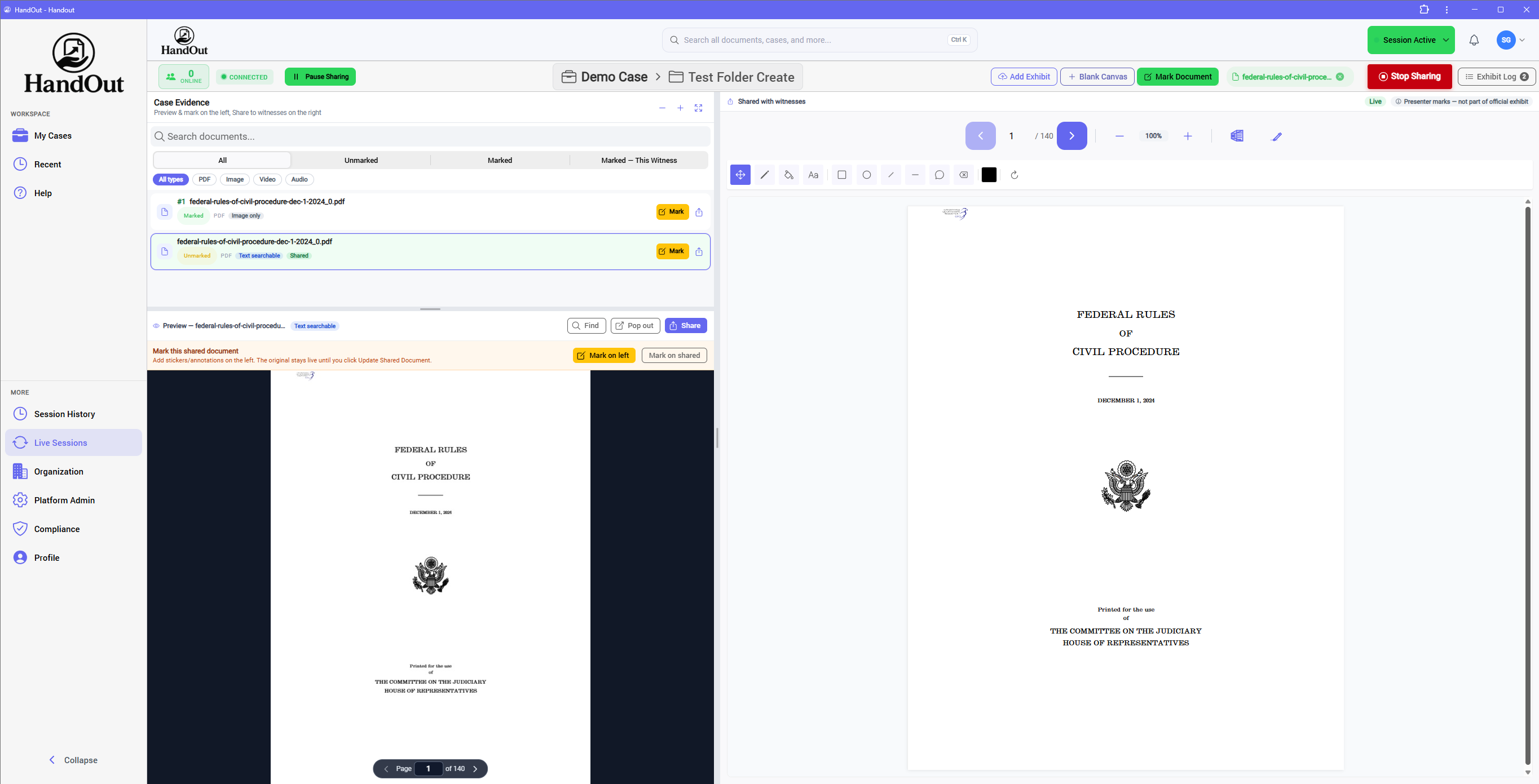
Screen-share. The exhibit eats the video. Faces disappear. Beside the call. Zoom or Webex stays open. HandOut is the viewer.
Lost time. Hunt the binder. Pass copies. Wait for the page. Same page. The room follows you. Sync All if anyone drifts.
Surprise doc. The exam stops. Or you skip the question. Pull and share. If it is in the case, it can be in front of the witness.
Non-paper. Video, audio, 400-page PDFs, hi-res photos. Same dock. PDF, image, video, and audio — same share.
Cost. Printers, tabs, couriers, staff time, travel. A seat. No overnight. No copy set. No courier.
Control. The binder is already in their lap. Pause sharing. Private prep. Resume when you are ready.
The record. Reconstruct what was marked after the fact. The package. Access code, expiring link, Certified Exhibit Log.